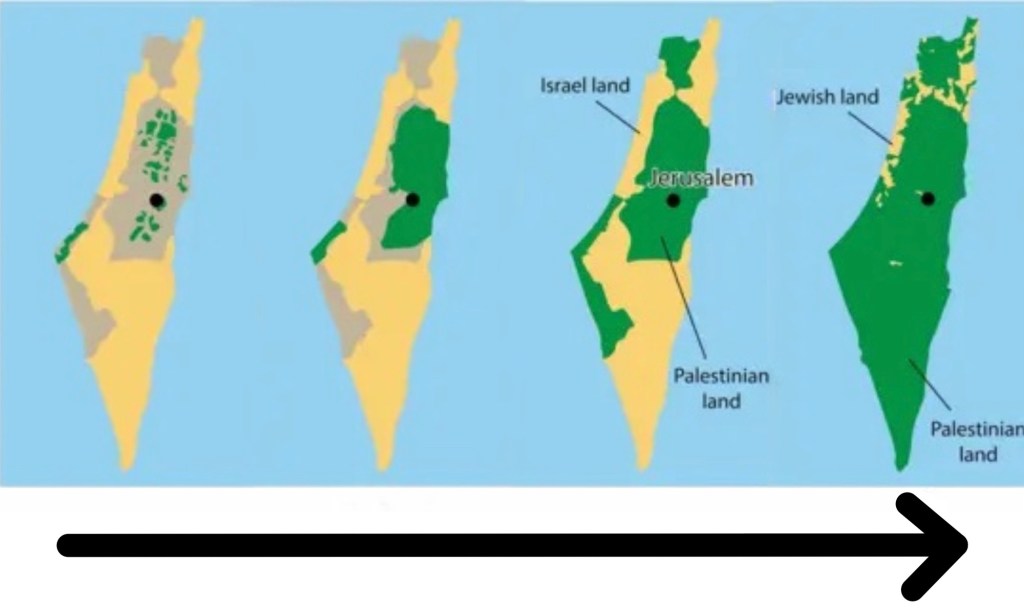
Let’s dispense with the linguistic gymnastics right now. When we talk about “settlers” terrorizing Palestinians in the West Bank, we are playing a game of semantic peekaboo that helps no one but the perpetrators. There is no difference between the state of Israel and the armed yahoos with M16s stealing olive groves, except in the minds of those who desperately need to see one. If you are armed by Israel, protected by the IDF, handed illegally expropriated land by the state, and shielded by the military while you kick families out of their ancestral homes, you are not a fringe actor. You are the Israeli government in a hoodie. It doesn’t take a geopolitical genius to figure that one out.
But here is where our collective brain short-circuits. The global response—heck, even the response from many Palestinians—suffers from a terminal case of the “Just Stops.” You know the refrain: Israel just needs to stop. Stop stealing. Stop bombing. Staahp. As if this is a toddler swatting a sibling, and a firm “No” will sort it all out. Look at towns like Mesafir Yatta. The villagers there don’t dream of justice anymore; they dream of a pause. They just want the settlers to quit trying to nick their homes today.
As if quitting now would end anything. As if Israel ever gives up land without taking two miles first, giving back one amid global applause, and keeping the other forever. Then rinse. Then repeat. And we—the international press, the U.N., the armies of armchair activists—fall for it every darned time, celebrating like we won the Super Bowl because we managed to “stop” the bulldozer this week, and thinking that taking anything back from Israel is completely out of reach.
Here is the uncomfortable reality: Israel’s entire existence, from the jump, has been expansionist. It’s not a land-grab; it’s a land-drip. They move as slowly as they must, or as fast as opportunity permits. They are in it for the long haul. Slow growth doesn’t bother them—they have the patience of geological formations. But slow doesn’t mean benign. It just means they’re playing chess while we’re playing whack-a-mole.
Why hasn’t the world given Israel the response it deserves? Because we are conditioned to react to the knife. The dramatic lunge. The clear and present danger. But what if the assailant isn’t charging with a machete, but is sneaking up with a syringe? One prick at a time. A lull, a ceasefire, a few breaks to let the wound heal—and then another prick. Same amount of blood at the end of the hour, just fewer screams along the way.
That’s the Zionist project in a nutshell. A few big incursions, yes—the ’48 and ’67 wars, the Gaza Holocaust—but mostly it’s a thousand small cuts. A village here. A nuclear scientist in Iran there. A new zoning law in Jerusalem that just happens to evict another extended family. A sliver of a neighborhood, then another sliver. Israel takes, and when the international outcry gets too loud, it graciously gives back part of what it stole, so you feel like you won something just by forcing them to return the change. Meanwhile, they’re pocketing the whole bill.
For decades, they got away with this because they moved at a glacial pace. Slow enough to bore the news cycle. Slow enough to earn a bemused nod from the West and a lazy blink from Arab leaders, who praised Israel for being “peaceful” while it was picking pockets, simply because it wasn’t doing it with a sledgehammer.
Then came the Gaza Holocaust. That was the needle finally hitting the bone. It exposed the brutality underneath the bureaucratic sprawl. It ripped the curtain open on the decades-long project. Suddenly, everyone could see the playbook. No more blindness.
But here’s our new problem: our expectation. The bar we set for our own activism. We still just want them to stop. That is the wrong paradigm.
You don’t deal with a mobster who has been shaking down the neighborhood for fifty years by asking him to pretty-please stop collecting protection money. You don’t just tell the arsonist to put out the fire and call it a day. You go after the crook. You make him pay back every cent. You make him rebuild the houses he burned. You punish him for the terror he inflicted. A criminal state is no different from a street thug; it just has better PR.
If we cannot afford to do more than “stop” Israel, we are still losing. Not fighting back, not clawing back what was taken, is a form of defeat. Because that is precisely Israel’s playbook: Take until stopped. Give back a crumb. Wait. Take again.
Palestinians firing back at settler incursions? Commendable. But if they’re not taking back what was stolen before the last incursion, if all they’re hoping for is to keep what they have now and not take back what they had before, it’s still a loss. If the world manages to halt the genocide in Gaza—and that’s a big “if”—but Israel isn’t forced to give back the buffer zones, isn’t forced to rebuild every clinic and school, and isn’t compelled to compensate every family for every injury, that’s a loss. If we don’t force a return to the lands inside of Israel proper, we are just rearranging deck chairs on a sinking moral ship.
The only way this isn’t a defeat is if we flip the script entirely. If we work in reverse to Israel’s playbook. Because accepting the status quo, even a paused one, isn’t peace. It’s just a resting period before the next needle prick. And I, for one, am tired of being the patient.

