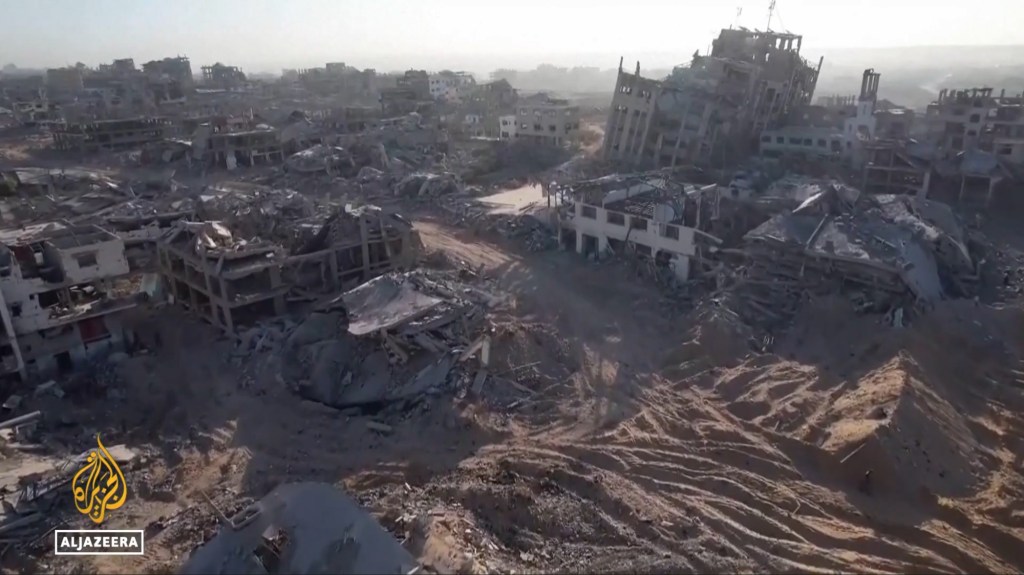
They’re calling it a breakthrough. A triumph of diplomacy. The latest example of American leadership bringing peace to the Middle East, or some such hogwash.
Let’s cut through the victory-lap fog: this ceasefire isn’t about ending anything. It’s about managing the optics of a 77-year-old project that’s been running on autopilot since the Nakba. The deal everyone’s celebrating is really just a calibration—turning down the volume on ethnic cleansing from a scream to a whisper, dialing back to the pre-October 7th simmer that didn’t make quite so many people uncomfortable at brunch.
What’s actually changed on the ground? Let me count the ways: nothing, nothing, and nothing.
Gaza remains an open-air prison. The West Bank is still a patchwork of checkpoints and settlements where armed zealots terrorize families with impunity. Palestinians live under a surveillance state that makes the Stasi look like mall security. And Israeli officials keep saying, out loud, with cameras rolling, that there will never be a Palestinian state—a detail that somehow never makes it into the “path to peace” coverage.
Oh, and Gaza? It’s rubble. Flattened. Block after block of what used to be homes, hospitals, schools—gone.
But sure, let’s pop the champagne.
The kicker? Israel’s already violating the agreement. Five Palestinians dead today. Aid trucks stopped at the border. The usual script. While Gazans understandably grab any respite they can get from the nightmare, the rest of us have zero reason to pretend this represents progress.
Don’t believe the hype. This isn’t Washington riding in on a white horse to save Palestinians from Israeli bombs. This is the U.S. and Europe throwing themselves in front of a runaway train – one they built, fueled, and waved goodbye to as it left the station.
The real story? Israel was about to become ungovernable for its Western sponsors.
In recent weeks, the global backlash hit critical mass. Hundreds of thousands were flooding European streets every weekend, not in scattered protests but in coordinated eruptions of rage. In Italy, the government was staring down the barrel of an actual political crisis. These weren’t your standard-issue marches-that-change-nothing. People were done.
Meanwhile, aid flotillas kept multiplying in the Mediterranean, each one a floating middle finger to the official narrative, magnetic poles for thousands of people who’d had enough of doom-scrolling genocide from their living rooms. The couch-to-action pipeline was real, and it was accelerating.
The imperial brain trust looked at the board and realized Israel had painted itself into a corner so tight that the whole regional chessboard was about to flip. That’s what this “peace deal” is actually about – damage control for the alliance, not mercy for the dead.
The American foreign policy establishment is engaged in a grotesque, self-fellating victory lap, pumping out grandiose “peace” announcements like a pharmaceutical company distributing free samples of Xanax. This isn’t celebration—it’s sedation. It’s a calculated dose of institutional Valium, mainlined directly into the cerebral cortex of an global public that was getting dangerously close to giving a damn.
The game here is transparent if you squint even a little: they need us to exhale, high-five each other about “getting the win,” and then zombie-walk back to our regularly scheduled programming. The pressure worked—actual, real pressure from normal human beings who briefly remembered they’re supposed to have opinions about whether we incinerate strangers on the other side of the planet. So naturally, the Blob is betting we’ll do what we always do: declare victory and go home, precisely at the moment when not going home actually matters.
It’s the oldest trick in the Washington playbook. Give the plebes just enough of a “win” to shut them up, then resume operations while they’re still drunk on their own sense of accomplishment.
Don’t take the bait.
 Collateral Damage